What if the biggest challenge facing associations isn’t what’s changing around them, but how ready they are to respond?
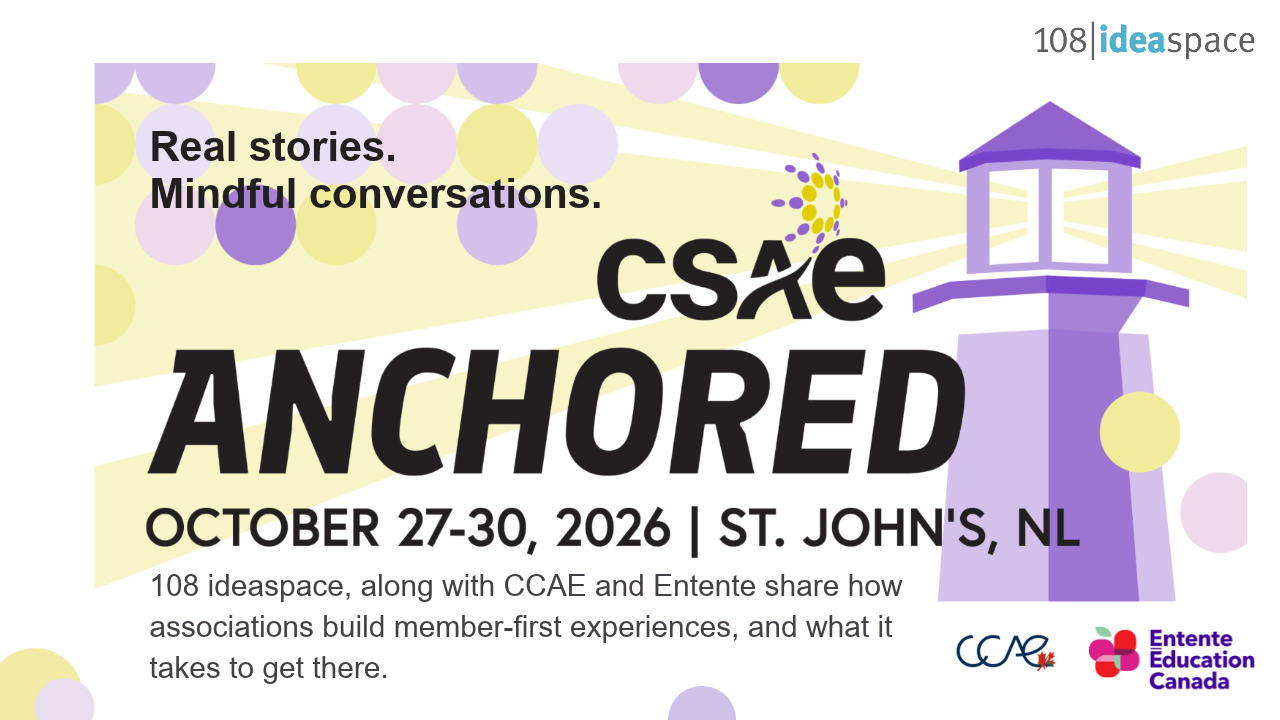
That question stayed with me throughout ANCHORED 2026, the Canadian Society of Association Executives (CSAE) national conference in St. John’s, Newfoundland and Labrador. I had the privilege of presenting twice this year, each time alongside an association leader who lives this work every day. That pairing was the whole point: I build the systems, they run associations on them. Here’s what I took away from each.
Session 1:“Building the Resilient Association” with Sylvia Link, CAE, Entente Education Canada (formerly RTOERO)
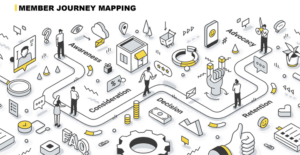
Sylvia and I built our session around Jane, a hypothetical member most leaders in the room recognized right away. She joins in January, attends a webinar, starts a course but stalls, registers for the conference and doesn’t show, asks a question in French, then goes quiet. In December, she doesn’t renew.
On paper, Jane looked engaged all year. A better renewal email wouldn’t have saved her, because her warning signs were scattered across five systems that never compared notes: the AMS, the learning platform, event registration, email and volunteer management. The problem wasn’t a lack of care from staff; it was that nobody could see the full picture until it was too late.
A few things that landed with the room:
Most of us are using AI in pockets, not as a plan. Staff are already experimenting across service, writing and analysis, but rarely with shared rules or a clear goal.
The more AI is allowed to do, the stronger the controls must be. Drafting is low risk. Acting on a member’s behalf is not. Every use needs a boundary: what it may use, what it may do alone, and when it must hand off to a person.
Resilience means not depending on heroic effort. When risk is seen early, the team can respond at scale, and service holds even when a colleague leaves. Sylvia brought this to life from the operations side, which made it real for every executive in the room.
Session 2: “Your Infrastructure Budget Is a Member Value Strategy” with Danielle Lamothe, Canadian Council for the Advancement of Education (CCAE)
This one started with a bold move. Four months into the role, Danielle asked her board to more than double CCAE’s annual technology spend, from about CAD $20K to CAD $45K, plus roughly CAD $100K from reserves. They said yes.
What I hope people took home:
Keeping infrastructure spend low doesn’t save money. It moves the cost into staff burnout, manual workarounds and inconsistent member experiences. CCAE members were receiving invoices as Word documents and being chased for payments they’d already made.
Reframe the question before you choose the tool. Danielle started thinking of her database as a CRM rather than association management software, and that shift changed everything about what CCAE needed. My own view: I’d rather invest in a foundation you can keep building on than in technology you already know you’ll replace in three years.
Spending went up, and so did sponsorship revenue. Annual conference sponsorship grew from CAD $56K to CAD $100K [between YEAR and YEAR], awards admin time dropped from 135 hours to 15, and freed-up staff time went into sponsors and fewer, better events. And not every fix was technology: the team scrapped 182 hours a year of weekly meetings in favour of ones with a clear purpose.
I also really appreciated Danielle’s honesty that it wasn’t frictionless. The first renewal cycle needed fixes, and the online community hasn’t taken off the way the beta suggested. That candour is what makes a case study useful.
Key takeaways
- Member risk hides in disconnected systems. Renewal problems usually start months earlier, in signals spread across platforms that don’t talk to each other.
- AI needs a plan and boundaries. Move from scattered experiments to approved uses, each with an owner and clear rules on when a person takes over.
- Underinvesting in infrastructure moves the cost rather than saving it. It shows up in staff burnout, workarounds and poor member experiences.
- Invest in a foundation, not a replacement cycle. A core system you can keep building on pays off over five to seven years.
- Modernization is about the foundations. Connected data, the right platform and clear guardrails give AI and new member services something solid to stand on.
So here’s my question for your next leadership meeting: if your members’ expectations changed tomorrow, would your technology be ready to keep up?
A huge thank you to Sylvia and Danielle for sharing the stage and their real stories, and to CSAE for another outstanding conference.
If you’d like the CCAE case study or the resilience toolkit we shared, send me a message. And if you’re thinking about what needs to evolve in your own organization, let’s talk.